Why Off-Season Storage Matters
When the snow melts and riding season ends, how you store your snowmobile decides what kind of shape it will be in next winter. A sled left sitting all summer with old fuel, a dead battery and no protection can cost hundreds in spring repairs, or simply refuse to start when the first snowfall arrives. Spend a couple of hours storing it properly and you protect both your machine and your wallet.
Here is a complete, step-by-step guide to putting your snowmobile away the right way.
1. Stabilize the Fuel
Old fuel is the number one cause of spring starting problems. Gas breaks down and gums up the carburetor or fuel injectors over months of sitting.
- Add a quality fuel stabilizer to the tank.
- Fill the tank close to full to reduce condensation and rust inside it.
- Run the engine for several minutes so the stabilized fuel reaches the carbs or injectors.
2. Fog the Engine
Fogging oil coats the inside of the cylinders so they do not rust or corrode while the engine sits unused for months.
With the engine running, spray fogging oil into the air intake until it smokes and stalls (follow your owner's manual for the exact method). This leaves a protective film on the internal parts. On two-stroke sleds especially, this step is worth the few minutes it takes.
Skipping fogging is one of the most common reasons a stored engine develops scoring or corrosion over the summer.
3. Change the Oil and Check Fluids
- Four-stroke sleds: change the engine oil and filter before storage. Used oil contains acids and moisture that can damage the engine while it sits.
- Chaincase oil: check and top up, or change if it is due.
- Coolant: make sure the level is correct and the mix will not freeze in an unheated shed.
- Brake fluid: check the level and condition.
4. Take Care of the Battery
A battery left connected and uncharged will usually be dead by spring, and deep discharge shortens its life permanently.
- Disconnect the battery, or remove it entirely.
- Store it somewhere cool and dry, not on a cold concrete floor.
- Keep it topped up with a battery tender or trickle charger through the off-season.
5. Lift the Track and Protect the Suspension
Letting the track sit flat on the ground all summer can cause flat spots and lets the suspension stay compressed.
- Use a sled lift or jack stand to raise the back end so the track is off the ground.
- This takes weight off the suspension and keeps the track in good shape.
- Spin the track occasionally over the summer if you can.
6. Belt and Clutch
Remove the drive belt for storage, or at least loosen the tension. Leaving a belt under tension for months can cause it to deform. Store the belt flat in a cool, dry place. Wipe down the clutch sheaves while you are there.
7. Grease, Lube and Protect
- Hit all grease fittings (zerks) on the suspension and steering.
- Spray a light protective oil on exposed metal to prevent rust.
- Wipe down and treat any bare metal or hardware that tends to corrode.
8. Clean It, Then Cover It
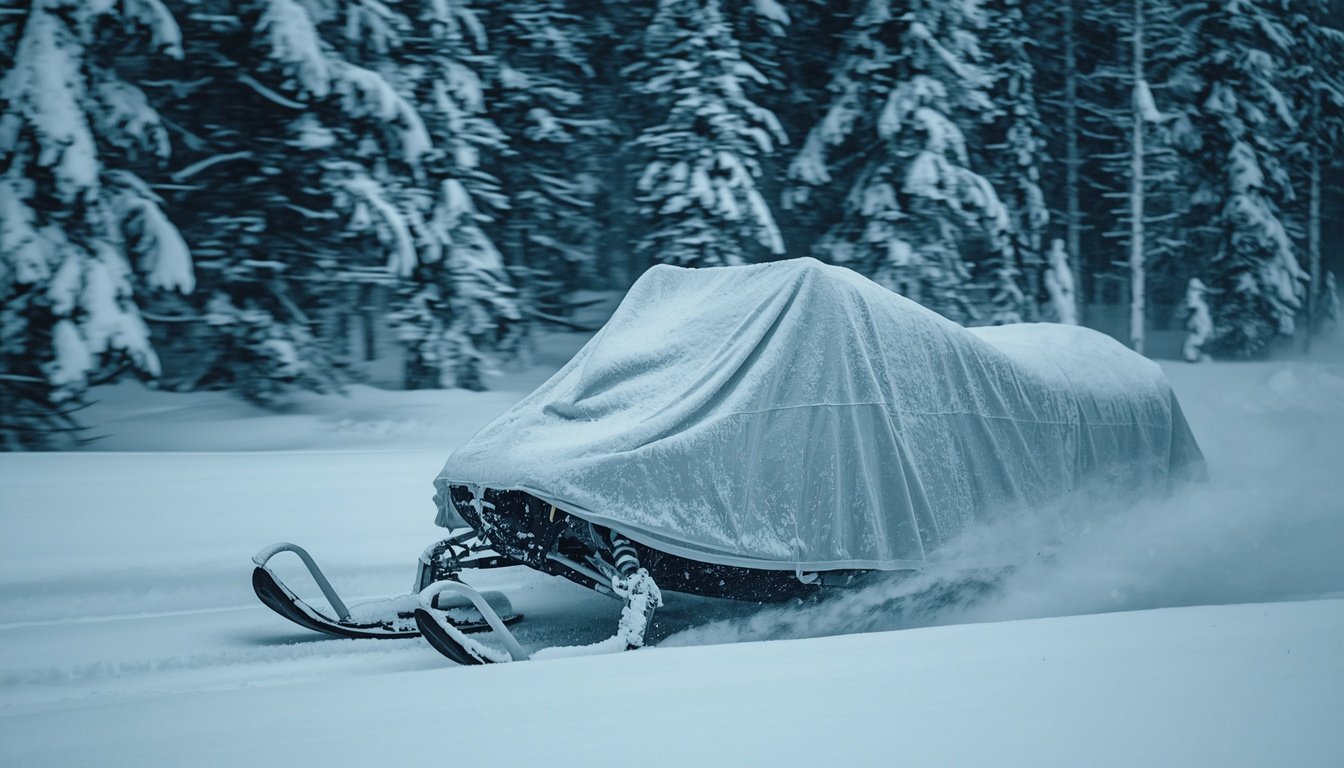
Wash off the season's dirt, salt and grime, and let everything dry completely before covering. Moisture trapped under a cover causes rust and mildew.
- Store indoors if possible, in a dry garage or shed.
- Use a breathable snowmobile cover, not a plastic tarp that traps moisture.
- Keep mice out. Rodents love to nest in stored sleds and chew through wiring and seats. Block the exhaust and intake openings, and consider deterrents around the storage area.
Spring Wake-Up Checklist
When the next season rolls around, before you ride:
- Reinstall the charged battery and the drive belt.
- Check all fluids again and look for leaks.
- Inspect the track, skis and suspension.
- Test the brakes and throttle for smooth operation.
- Start it up and let it warm before that first ride.
If anything seems off, or you are buying a used sled and want an expert to look it over, you can request a pre-purchase inspection or follow our free inspection checklist.
The Bottom Line
Proper off-season storage is the cheapest insurance you can buy for your snowmobile. A few hours of fuel stabilizer, fogging, fluids, battery care and a good cover will save you from frustrating repairs and a no-start headache when the snow returns.
Looking to upgrade before next season? Browse snowmobiles for sale across Canada, find parts and accessories, or map out where to ride with our Trail Finder.